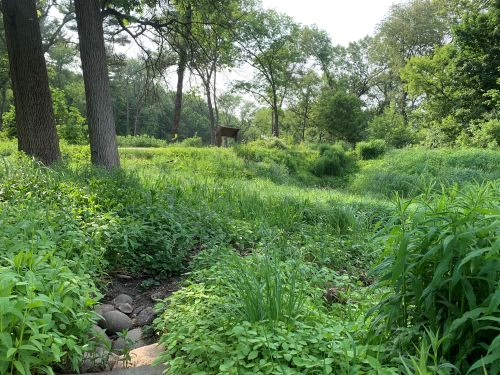
Ravine restoration is rarely just about fixing erosion—it is about protecting public infrastructure, preserving valued community assets, and managing stormwater responsibly in the face of aging systems and changing rainfall patterns. In Rockford, Illinois, Sinnissippi Park presented a textbook example of how unchecked stormwater conveyance through a steep ravine can escalate into a visible, disruptive, and costly municipal problem.
This large-scale ravine restoration project, completed in 2024, addressed chronic sediment discharge, hydraulic stress, and repeated flooding near one of Rockford’s most recognizable park entrances adjacent to the Nicholas Conservatory and historic rose garden. What began as a stormwater overflow issue ultimately required a comprehensive site remediation strategy that combined engineered stabilization with ecological restoration—an approach increasingly relevant for municipalities across northern Illinois.
Ravine Restoration at Sinnissippi Park
The need for ravine restoration at Sinnissippi Park became impossible to ignore after repeated storm events caused stormwater to overflow from a manhole and deposit sediment at a prominent park entrance. Beyond the immediate aesthetic impacts, the issue raised concerns about public safety, long-term infrastructure integrity, and sediment transport into the Rock River.
Investigation revealed that runoff from an upstream golf course, adjacent parking areas, and surrounding neighborhoods was being funneled into a steep, sandy ravine. The stormwater system forced this flow through a 90-degree pipe bend before discharging toward the river. The resulting hydraulic pressure accelerated erosion, destabilized slopes, and transported sediment downstream, placing a recreational trail and nearby infrastructure at risk.
The ravine restoration strategy focused on stabilizing conditions upstream of the pipe bend to reduce velocity, manage sediment, and relieve stress on downstream systems. Engineered rock features were installed to control grade and dissipate energy, while site remediation measures addressed the underlying ecological instability driving erosion. By combining structural and natural solutions, the project restored function to the ravine while maintaining compatibility with a heavily used public park.
Process and Methodology
From a site remediation perspective, this ravine restoration project required careful coordination between civil design, ecological planning, and construction. The Rockford Park District led the effort, with ecological planning by A3 Environmental Consultants (A3E) – known as Olson Ecological Solutions at the time – design services by Farnsworth, and plant installation by Cardinal State under the direction of RES. A3E was responsible for assessing ecological conditions and developing planting specifications that aligned with engineered stabilization.
A3E evaluated existing ecological functions, soil conditions, invasive species pressure, and opportunities for improvement throughout the ravine corridor. Buckthorn and other invasive species were removed to reduce competition and allow for long-term stabilization using native vegetation. Native grasses, sedges, and wildflowers were selected for their root structure, resilience, and stormwater filtration capacity—critical factors for ravine restoration in sandy soils common to the Rockford area.
Selective tree removal was implemented to increase sunlight penetration, encourage understory growth, and support oak woodland regeneration. Because soil chemistry challenges and invasive pressure posed establishment risks, plantings were phased over multiple seasons. Adaptive management measures—including reseeding, straw wattles, and temporary irrigation—were deployed in response to drought conditions and storm damage.
Sediment capture measures were installed at the base of the ravine to intercept material before it reached the highway crossing, reducing downstream impacts. Throughout the process, the restoration approach aligned with applicable stormwater and environmental regulations while supporting long-term maintainability—an essential consideration for municipal ownership.
Business and Municipal Value
For municipal officials, ravine restoration must demonstrate clear value beyond environmental benefits. At Sinnissippi Park, the site remediation effort quickly resolved the original flooding and sediment issues at the rose garden entrance, eliminating a recurring maintenance and public relations problem for the Park District.
By stabilizing slopes and reducing sediment transport, the project protected nearby infrastructure and recreational assets, lowering future repair and cleanup costs. Native plantings now provide stormwater filtration from parking areas through a biofiltration basin, stabilize a 35-foot riparian buffer along the ravine, and reinforce a hillslope adjacent to a highway—all while functioning within a traditionally landscaped park setting.
The project was completed on schedule and within budget, demonstrating that well-planned ravine restoration can be both fiscally responsible and operationally effective. Pollinator habitat and improved aesthetics added secondary benefits that enhanced visitor experience and reinforced the Park District’s stewardship goals.
Public engagement also played a role in project success. Signage and outreach helped address community concerns about tree removal in one of Rockford’s oldest and most cherished parks, reframing the work as a long-term investment in forest health and public safety rather than a loss of canopy.
Local and Regional Considerations
Ravine restoration in Rockford, Illinois presents challenges typical of northern Illinois municipalities: highly erodible soils, legacy stormwater infrastructure, and intense rainfall events that strain existing systems. Sinnissippi Park illustrates how upstream land uses—such as golf courses and parking facilities—can concentrate runoff in ways older infrastructure was never designed to handle.
By addressing these issues holistically, this project provides a replicable model for municipalities managing ravines near public amenities, trails, and waterways. Integrating engineered controls with ecological restoration allows communities to meet regulatory obligations, reduce risk, and improve resilience without sacrificing public access or aesthetic value.
As climate variability continues to influence storm intensity, ravine restoration and site remediation will remain critical tools for protecting municipal infrastructure and public spaces throughout the Rockford region and beyond.
A Model for Sustainable Municipal Ravine Restoration
The Sinnissippi Park project demonstrates that ravine restoration, when executed as a comprehensive site remediation effort, can resolve chronic infrastructure issues while delivering ecological, operational, and community benefits. Completed in 2024, this project stands as an example of how municipalities can move beyond reactive maintenance toward sustainable, long-term solutions.
If your community is facing erosion, sediment discharge, or stormwater challenges in ravine systems, A3E Environmental can help evaluate conditions, design practical remediation strategies, and deliver results that protect both infrastructure and public trust.
