What Is Nonpoint Source Pollution?
Nonpoint source pollution (NPS pollution) is contamination that enters waterways from diffuse, widespread sources rather than a single identifiable discharge point. Unlike a factory pipe dumping waste into a river, nonpoint source pollution comes from rainfall and snowmelt moving across land — picking up fertilizers, pesticides, sediment, oil, bacteria, and other pollutants before depositing them into streams, lakes, and groundwater.
Nonpoint source pollution is the leading cause of water quality problems in the United States, according to the U.S. Environmental Protection Agency. In Illinois alone, hundreds of waterways are impaired by NPS pollution from agricultural runoff, urban stormwater, and construction activity. The good news: proven solutions exist. Best management practices (BMPs) — from native plantings to constructed wetlands — can dramatically reduce pollutant loads when designed and installed correctly.
Common Causes of Nonpoint Source Pollution

Urban stormwater runoff from impervious surfaces is a major source of nonpoint source pollution in Illinois communities
NPS pollution originates from everyday land uses that most people never think of as pollution sources. Understanding these causes is the first step toward effective watershed management.
Agricultural Runoff
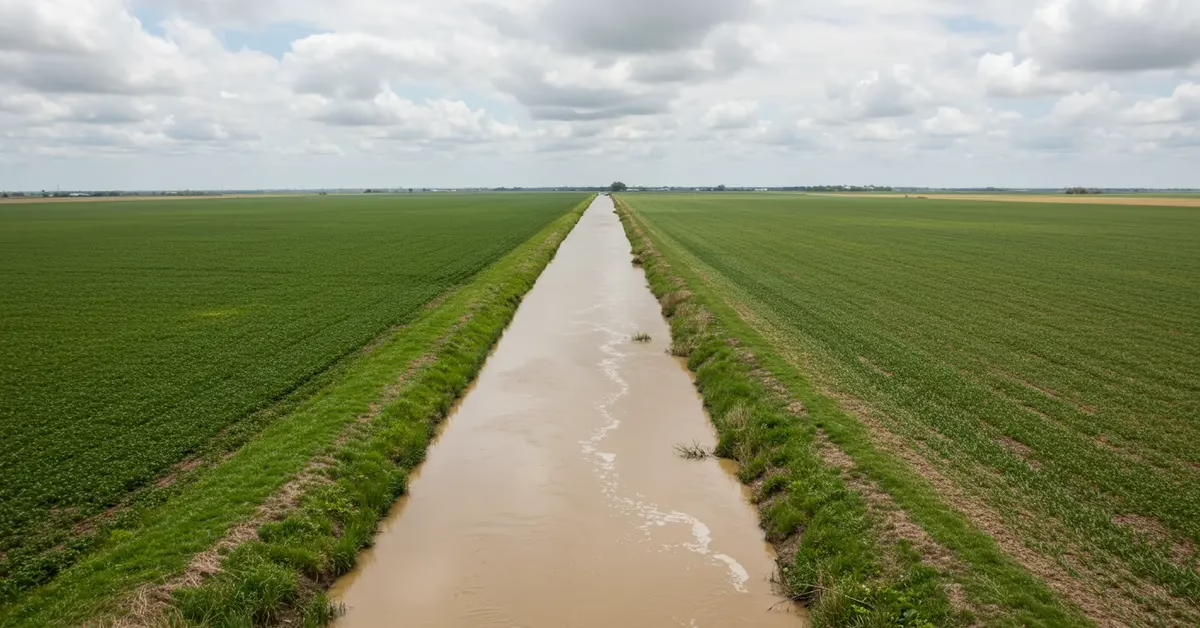
Farm fields are the single largest source of nonpoint source pollution in the Midwest. Rainfall washes nitrogen and phosphorus from fertilizers, along with sediment from tilled soil, into nearby streams. Livestock operations add bacteria and organic matter. In Illinois, agricultural NPS pollution drives algal blooms, oxygen depletion, and habitat loss across major watersheds.
Urban and Suburban Stormwater
Impervious surfaces — roads, parking lots, rooftops — prevent rainfall from soaking into the ground. Instead, stormwater races across pavement, collecting motor oil, heavy metals, road salt, pet waste, and trash before entering storm drains that discharge directly to streams. As communities grow, so does their stormwater footprint.
Construction Activity
Active construction sites expose bare soil to erosion, generating sediment loads 10 to 20 times greater than agricultural land and 1,000 to 2,000 times greater than forested land. Without proper erosion controls, a single development project can smother downstream habitat with sediment.
Failing Septic Systems and Legacy Contamination
Aging septic systems leach bacteria, nitrates, and pharmaceuticals into shallow groundwater. Combined with legacy contamination from historical land uses — old industrial sites, abandoned mines, former agricultural chemical storage — these sources create chronic, low-level pollution that degrades water quality for decades.
Why Nonpoint Source Pollution Matters in Illinois
Illinois faces unique NPS pollution challenges. The state’s landscape is dominated by agriculture (roughly 75% of land area), and its urban centers generate massive stormwater volumes. The Illinois Environmental Protection Agency (IEPA) maintains a list of impaired waterways under the Clean Water Act — and nonpoint source pollution is the primary driver for most of them.
Stormwater management is a growing priority for Illinois municipalities. Cities like Rockford, Belvidere, and communities across the Chicago suburbs are investing in green infrastructure and watershed planning to address NPS pollution before it reaches drinking water sources.
The federal Clean Water Act Section 319 program provides grant funding specifically for NPS pollution control projects. Illinois receives millions annually through this program, administered by IEPA, to fund watershed plans, BMP installations, and community education initiatives. A3 Environmental Consultants has helped Illinois communities access and implement 319 grant funding for on-the-ground restoration work.
Proven Solutions: Stormwater BMPs That Work
Best management practices (BMPs) are the primary tool for controlling nonpoint source pollution. These engineered and nature-based solutions intercept polluted runoff, filter contaminants, and restore natural hydrological function. The right combination of BMPs depends on the pollution source, site conditions, and watershed goals.

A3E and Olson Ecological Solutions installing native plantings for the IEPA 319(h) program at Parker Woods, Rockford, IL
Native Plantings and Vegetated Buffers
Deep-rooted native grasses and wildflowers slow runoff velocity, filter sediment, and absorb nutrients before they reach waterways. Riparian buffers — strips of native vegetation along stream banks — are among the most cost-effective BMPs for agricultural and urban watersheds alike.
Constructed Wetlands
Engineered wetlands replicate the water-cleaning function of natural wetland systems. They capture stormwater, settle out sediment, and use biological processes to break down nutrients and bacteria. A well-designed stormwater wetland can remove 50 to 80 percent of sediment and 20 to 40 percent of nitrogen from incoming runoff.
Bioswales and Rain Gardens
These landscape features capture and infiltrate stormwater at the source. Bioswales — shallow, vegetated channels — convey and filter runoff along roadways and parking areas. Rain gardens use depression planting beds to absorb rooftop and driveway runoff. Both reduce the volume and pollutant load of stormwater reaching municipal systems.
Permeable Pavement and Green Infrastructure
Green infrastructure approaches replace impervious surfaces with permeable alternatives — porous pavement, green roofs, tree box filters — that allow rainfall to infiltrate on-site rather than becoming polluted runoff. These solutions are particularly effective in urban settings where space for traditional BMPs is limited.
A3E in Action: Parker Woods Watershed Restoration in Rockford, IL
In 2025, A3 Environmental Consultants partnered with Olson Ecological Solutions and Region 1 Planning Council on a Section 319(h) watershed restoration project in Rockford, Illinois (42.2711 N, 89.0940 W). The project targeted nonpoint source pollution in the Buckbee Creek and South Fork Kent Creek Watersheds — two waterways impaired by sediment, nutrient loading, and thermal pollution from urban and agricultural runoff.
A3E and OES designed and installed wetland BMPs at Parker Woods, combining native plantings for infiltration and erosion control with stormwater capture and slow-release systems. The project created pollinator and aquatic habitat while engaging local volunteers and landowners in watershed stewardship.
Key project elements included:
- Baseline watershed assessments aligned with IEPA guidelines
- Native planting and management plans for wetland BMPs
- Stormwater capture designed for long-term pollutant reduction
- Community education through signage, workshops, and volunteer planting days
- Coordination with Region 1 Planning Council for cross-jurisdictional outreach
This project demonstrates how 319(h) funding, combined with experienced ecological consulting, turns impaired waterways into functioning ecosystems — reducing NPS pollution while building community resilience.
What to Expect When You Work with A3E
A3 Environmental Consultants provides end-to-end support for nonpoint source pollution projects across Illinois. Whether you are a municipality applying for 319 grant funding, a developer needing stormwater BMP design, or a land trust pursuing restoration work, A3E brings the technical expertise and regulatory knowledge to get results.
Our NPS pollution services include:
- Watershed assessments and baseline water quality monitoring
- BMP design, installation oversight, and long-term monitoring
- 319 grant application support and administration
- Native planting plans and ecological restoration
- IEPA and USACE regulatory compliance
A3E has been solving environmental problems across Illinois since 2015 — from Phase I ESAs to large-scale watershed restoration. Our team includes licensed Professional Geologists (P.G.) and ecologists with decades of field experience.
Frequently Asked Questions About Nonpoint Source Pollution
What is the difference between point source and nonpoint source pollution?
Point source pollution comes from a single, identifiable location — like a factory discharge pipe or sewage treatment plant outfall. These sources are regulated under Clean Water Act NPDES permits. Nonpoint source pollution comes from diffuse sources spread across the landscape — agricultural fields, roads, lawns, construction sites — making it harder to trace and regulate but often more damaging in total pollutant load.
What are examples of nonpoint source pollution?
Common examples include fertilizer and pesticide runoff from farms and lawns, sediment from construction sites and eroding stream banks, motor oil and heavy metals from roads and parking lots, bacteria from pet waste and failing septic systems, and road salt entering waterways during winter. Any pollutant that washes off the land surface during rainfall is considered nonpoint source pollution.
How is nonpoint source pollution controlled?
NPS pollution is controlled primarily through best management practices (BMPs) — engineered and nature-based solutions that intercept, filter, and treat polluted runoff before it reaches waterways. Examples include native buffer plantings, constructed wetlands, bioswales, rain gardens, and permeable pavement. Federal and state grant programs like Section 319 fund BMP installation and watershed planning.
Does Illinois have funding for NPS pollution projects?
Yes. The Illinois EPA administers Section 319(h) grants funded through the federal Clean Water Act. These grants support watershed planning, BMP design and installation, water quality monitoring, and community education. Municipalities, counties, planning councils, and conservation districts are eligible to apply. A3 Environmental Consultants helps communities develop competitive applications and manage funded projects.
Who is responsible for nonpoint source pollution?
Because NPS pollution comes from diffuse sources, no single party bears sole responsibility. Landowners, farmers, developers, municipalities, and transportation agencies all contribute to — and can help solve — the problem. Federal law addresses NPS pollution primarily through voluntary programs and grant funding rather than the permit-based enforcement used for point sources. Effective NPS pollution control requires collaboration across jurisdictions and land uses.
Ready to address nonpoint source pollution in your community?
Contact A3 Environmental Consultants or call (888) 405-1742 for a consultation.

We Fix Gnarly Environmental Problems
Reviewed by Alisa Allen, P.G.