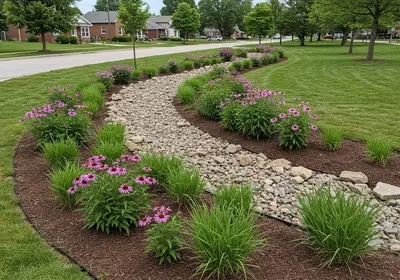
Green Infrastructure Grant programs fund bioswales, stormwater wetlands, and native plantings that reduce nonpoint source pollution in Illinois communities. The IEPA’s Green Infrastructure Grant Opportunities (GIGO) program is one of the most accessible funding sources for municipalities ready to replace aging stormwater infrastructure with nature-based solutions.
A3 Environmental Consultants (A3E) helped the City of Rockford, Illinois secure and execute a Green Infrastructure Grant that transformed a neglected drainage ditch at Levings Lake into a functioning bioswale and constructed stormwater wetland. This case study shows how the grant process works from application through completed installation.

Constructed stormwater wetland at Levings Lake, Rockford IL
What Is a Green Infrastructure Grant?
A Green Infrastructure Grant funds the design and construction of nature-based stormwater management systems — bioswales, rain gardens, constructed wetlands, permeable pavement, green roofs, and vegetated buffers. In Illinois, the primary Green Infrastructure Grant program is the IEPA’s GIGO (Green Infrastructure Grant Opportunities) program, funded through the Clean Water Act.
GIGO grants support projects that reduce nonpoint source pollution through best management practices (BMPs). Eligible applicants include municipalities, counties, park districts, soil and water conservation districts, and qualified nonprofits. Projects must demonstrate measurable water quality improvements and community benefits.
Unlike traditional gray infrastructure (pipes, culverts, detention basins), green infrastructure uses vegetation, soil, and natural processes to manage stormwater at its source. This approach reduces combined sewer overflows, improves water quality, creates habitat, and delivers amenity value to surrounding neighborhoods — all factors that strengthen a Green Infrastructure Grant application.
Case Study: Green Infrastructure Grant at Levings Lake, Rockford IL
The south side of Levings Lake in Rockford, Illinois (42.2586°N, 89.0839°W) was a classic candidate for green infrastructure intervention. A 0.11-acre roadside ditch fed into a 3.83-acre mowed basin between South Pierpont Avenue and Levings Park. This basin collected unfiltered runoff from a 490-acre watershed of residential, commercial, industrial, and agricultural land — delivering sediment, nutrients, and pollutants directly into the lake.
With Green Infrastructure Grant funding from the IEPA GIGO program, A3E partnered with the City of Rockford and the Rockford Park District to redesign the site. The project replaced passive drainage with an engineered bioswale and constructed stormwater wetland that actively filters runoff before it reaches Levings Lake.
Native plugs establishing through erosion control blanket
How the Green Infrastructure Grant Project Was Built
The project moved through four phases, each aligned with GIGO program requirements:
Phase 1: Grant Application
A3E prepared the GIGO application with compliance-focused documentation including watershed analysis, pollution load modeling, green infrastructure design compatibility assessment, and a long-term maintenance plan. The application narrative demonstrated how the project would reduce sediment and nutrient loading into Levings Lake — the measurable outcome that IEPA requires.
Phase 2: Design
Designs followed EPA guidance on bioswale sizing, check dam placement, and native species selection based on Illinois-specific ecological standards. The existing berm was removed and the basin regraded to expand stormwater retention capacity — a quantifiable improvement tied directly to GIGO performance metrics.
Phase 3: Construction and Planting
In fall 2022, Rockford Park District staff and community volunteers installed native plant plugs throughout the erosion control blanket in the constructed wetland. This public involvement milestone demonstrated community engagement — a key GIGO scoring criterion. Coconut fiber core logs and biodegradable erosion control mats protected plantings during establishment.
Phase 4: Establishment and Monitoring
By 2025, the former ditch had become a functioning bioswale and the mowed basin a robust stormwater wetland framed by native flora. The project now reduces sediment and pollutant loads while providing habitat for pollinators and small wildlife — fulfilling both ecological and grant objectives.
Green Infrastructure Grant Results
The Levings Lake project delivered measurable outcomes aligned with GIGO program goals:
- Pollutant load reduction: Bioswale and wetland now filter runoff from a 490-acre watershed before it enters the lake
- Habitat creation: Native prairie plants and wetland vegetation provide pollinator and wildlife habitat where mowed turf grass previously offered none
- Community engagement: Volunteer planting events built public support and met GIGO’s community involvement requirements
- Maintenance efficiency: Natural systems require less ongoing maintenance than traditional gray infrastructure
- Replicability: The project serves as a template for other Rockford neighborhoods and Illinois municipalities pursuing similar green infrastructure improvements
Completed bioswale with native plantings
How to Win a Green Infrastructure Grant
Based on A3E’s experience with the GIGO program, successful applications share these characteristics:
- Quantified pollution reduction: Model the sediment, nutrient, and pathogen load reductions your project will achieve. IEPA reviewers need numbers, not narratives.
- Site-specific design: Generic green infrastructure concepts don’t win grants. Show engineered designs tailored to your site’s hydrology, soils, and watershed characteristics.
- Community involvement plan: GIGO favors projects that engage residents. Include volunteer planting events, educational signage, or partnerships with local organizations.
- Long-term maintenance commitment: Demonstrate that the applicant has a funded plan to maintain the installation after the grant period ends.
- Regulatory alignment: Show how the project advances compliance with MS4 permits, watershed plan goals, or 319 Grant implementation priorities.
A3E Green Infrastructure Experience
A3 Environmental Consultants delivers the full range of services needed to pursue and execute green infrastructure projects:
- Green Infrastructure Grant application writing and IEPA GIGO documentation
- Bioswale, rain garden, and stormwater management design
- Constructed wetland design and installation oversight
- Native vegetation specification and planting plans
- Ecological services including habitat assessment and restoration monitoring
- Watershed planning that positions communities for implementation funding
Frequently Asked Questions
What does a Green Infrastructure Grant fund?
A Green Infrastructure Grant funds nature-based stormwater management projects including bioswales, rain gardens, constructed wetlands, permeable pavement, green roofs, and vegetated buffers. The IEPA GIGO program specifically targets projects that reduce nonpoint source pollution through best management practices.
Who can apply for a Green Infrastructure Grant?
Municipalities, counties, park districts, soil and water conservation districts, and qualified nonprofits are eligible to apply for IEPA GIGO funding. Private developers may partner with an eligible lead applicant.
How much funding does a Green Infrastructure Grant provide?
GIGO awards vary by project scope. The program typically funds a significant portion of design and construction costs, with the applicant providing a local match. Contact the IEPA for current funding levels and match requirements.
Does A3E write Green Infrastructure Grant applications?
Yes. A3 Environmental Consultants prepares GIGO applications with the technical documentation, pollution load modeling, and design specifications that IEPA reviewers require. The Levings Lake project in Rockford is a direct example of A3E’s grant-to-construction capabilities.
What is the difference between green and gray infrastructure?
Gray infrastructure uses pipes, culverts, and concrete structures to convey stormwater away from developed areas. Green infrastructure uses vegetation, soil, and natural processes to manage stormwater at its source — filtering pollutants, reducing volume, and creating habitat. Most modern stormwater programs use a combination of both approaches.
Start Your Green Infrastructure Project
If your community is ready to pursue IEPA GIGO funding or other green infrastructure programs, A3 Environmental Consultants has the grant writing expertise and technical design capabilities to take your project from concept through completed installation.
Contact A3E About Green Infrastructure Grants →
Call us at (888) 405-1742 or email Info@A3E.com.
Reviewed by Tim Allen, A3 Environmental Consultants

We Fix Gnarly Environmental Problems
