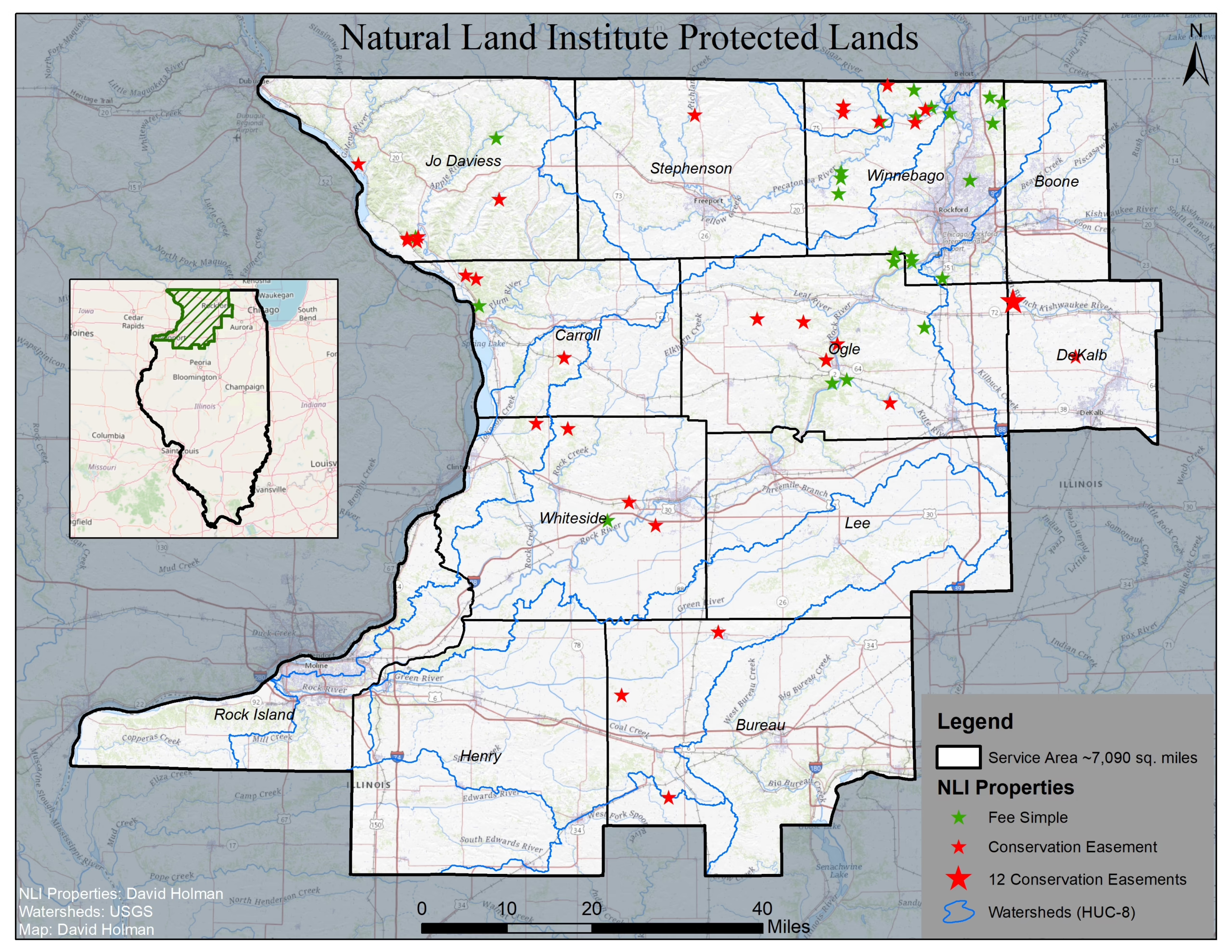
A well-designed Strategic Conservation Plan is more than a document, it is a decision-making framework that helps land trusts and public agencies protect the right land, at the right time, for the right reasons. In Northwest Illinois, where working agricultural landscapes intersect with high-value waterways and remnant natural habitats, conservation decisions must balance ecological function, community values, and organizational capacity.
During 2022–2023, A3 Environmental Consultants (A3E), formerly known as Olson Ecological Solutions, supported the Natural Land Institute (NLI) with a Strategic Conservation Plan designed to make land protection decisions more consistent, defensible, and mission-effective for the next 10 years. Rather than expanding strategies for every committee or program area, the plan focused on refining how NLI evaluates and prioritizes conservation opportunities—ensuring limited resources are directed where they provide the greatest long-term benefit
As Illinois’ first accredited land trust, NLI has protected, managed, and restored approximately 19,000 acres across Northwest Illinois. Their need was not a lack of vision—but a need to modernize and organize an existing Conservation Plan so it could consistently guide land acquisition, conservation easements, and community engagement in a rapidly changing landscape.
Strategic Conservation Plan Framework and Core Principles
At the heart of this Strategic Conservation Plan was a deliberate shift in approach. Instead of creating standalone strategies for individual subcommittees, the planning effort concentrated on refining and maximizing the efficiency of NLI’s Project Selection Checklist. The goal was straightforward but powerful: clearly define which resources matter most to NLI and its communities, and create a repeatable process to conserve those resources more effectively.
This approach resulted in a new project selection process built around five Core Conservation Principles, each supported by specific goals, strategies, challenges, and priority resources. These principles provide a consistent lens through which every potential project—acquisition, conservation easement, or partnership opportunity—can be evaluated.
The five conservation goals established by the plan are:
- Build Landscape-Scale Conservation
- Support Biodiversity
- Protect Water Quality and Hydrologic Integrity
- Enhance Climate Resilience
- Increase Land Equity and Access
Together, these goals ensure that land protection decisions advance ecosystem function while reflecting community priorities and NLI’s long-term mission.
Planning Process and Methodology
The plan was developed through a structured, three-phase process over the course of approximately one year. It was designed to guide decision-making for ten years, with built-in flexibility allowing for periodic updates as conditions, data, and community needs evolve. A3E made sure that community voices were heard through a community feedback survey where local residents could provide their concerns and priorities.
Phase 1: Goals, Priorities, and Partnerships
The process began by identifying broad organizational goals and conservation priorities. During this phase, A3E facilitated engagement with NLI staff, committees, and Regional Partners to identify shared objectives and concerns. A clear planning framework was established to serve as the foundation for subsequent phases.
Phase 2: Conditions Analysis and Opportunity Assessment
Existing data and resources were analyzed to understand current conditions across NLI’s Northwest Illinois service area (approximately 7,000 square miles). This included identifying ecological opportunities, development pressures, and operational constraints. Coordination with Regional Partners helped ensure that conservation priorities aligned across organizations and avoided unnecessary duplication of effort.
Phase 3: Plan Development and Approval
The final phase focused on drafting and refining the internal Strategic Conservation Plan. Protected areas and their rationales were finalized, and review meetings were held with the planning committee and Regional Partners. The completed internal plan was submitted to the NLI Board and formally approved at the June 2023 board meeting.
Decision Tools That Drive Consistent Land Protection
A defining deliverable of the Strategic Conservation Plan was the creation of practical tools to support real-time decision-making. A3E developed a detailed project selection scorecard that translates the plan’s five goals into weighted evaluation questions. Each question is assigned a value from one to three, producing a cumulative score that allows projects to be ranked objectively.
This scorecard is embedded within an Excel-based tracking system that also captures property details, ownership information, tax considerations, and other relevant project data. The result is a centralized, transparent system that supports internal alignment, grant reporting, and clear communication with partners and stakeholders.
Rather than relying on institutional memory or subjective judgment, NLI can now evaluate opportunities using a consistent framework that reflects both ecological value and organizational priorities.
Regional Conservation Considerations in Northwest Illinois
Northwest Illinois presents distinct conservation challenges shaped by its geology, land use patterns, and water resources. The Strategic Conservation Plan integrates regional considerations such as biodiversity indicators, threatened and endangered species, protected lands, hydric soils, aquifer recharge areas, and Illinois Department of Natural Resources conservation opportunity areas.
The plan identifies three types of conservation focus areas:
- Priority Conservation Areas, where protected lands, waterways, and ecological value overlap
- Conservation Supporting Areas, where collaboration with other land trusts strengthens landscape-scale outcomes
- Community Conservation Areas, often more urban settings where education and engagement programs expand conservation impact beyond land acquisition
Organizational and Community Value
Beyond ecological outcomes, the Strategic Conservation Plan strengthened NLI’s internal alignment and external credibility. Staff, leadership, and partners now share a common framework for evaluating projects, reducing uncertainty and supporting consistent decision-making.
For communities across Northwest Illinois, the plan ensures that land protection efforts reflect local values while advancing regional ecosystem function. For funders and partners, it provides a clear, defensible rationale for how and why conservation investments are prioritized.
Conclusion
This Strategic Conservation Plan demonstrates how thoughtful planning can elevate land protection from opportunity-driven to mission-driven. By focusing on goal alignment, community values, and ecosystem function, NLI now has a durable framework to guide conservation decisions for the next decade.
For land trusts, municipalities, and conservation organizations, a Strategic Conservation Plan is not just a planning exercise—it is essential infrastructure for long-term conservation success.


