Effective wetland restoration depends on more than construction and planting—it requires consistent monitoring to ensure long-term success. In Winnetka, Illinois, A3 Environmental Consultants (A3E) has been providing vegetation monitoring services since 2024 to ensure that disturbed wetlands recover according to United States Army Corps of Engineers permit performance standards. Monitoring ensures that restoration activities achieve their goals and remain compliant with regulatory requirements.
For municipalities, developers, and government agencies, vegetation monitoring translates permit obligations into actionable data. It tracks vegetation establishment, wetland health, and overall restoration success. Without this monitoring, even well-intentioned restoration efforts can fail to meet regulatory expectations, resulting in extended monitoring or enforcement actions.
Vegetation Monitoring in Winnetka, Illinois
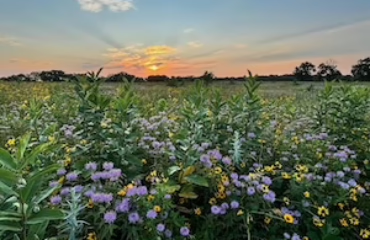
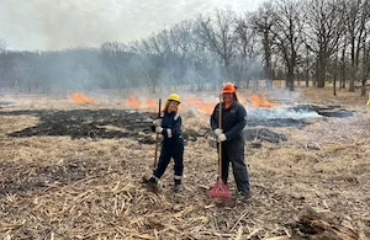
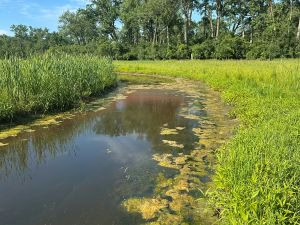
The Hibbard Preserve Stormwater Management Wetlands Project involved the restoration and subsequent monitoring of jurisdictional wetlands after construction for the Hibbard Road Flood Control Project disturbed approximately 10.5 acres of wetland in 2022. A3E, as a subcontractor to Strand Associates, conducted monitoring to verify that all restoration activities were progressing as intended, following the completion of construction activities and initial stabilization of the site. Multiple site visits captured detailed data on vegetation communities and other ecological indicators, helping to ensure compliance with the monitoring plan and permit performance standards.
Monitoring allows project managers and regulatory agencies to see trends over time, rather than relying solely on single-point inspections. By carefully documenting vegetation establishment and other restoration indicators, A3E provided clear, defensible evidence that the site was trending toward full compliance and ecological success.
Process and Methodology
A3E’s vegetation monitoring process is grounded in structured, repeatable methodology tailored to each site. For Hibbard Preserve, this included several site visits where ecologists collected field data on vegetative communities, wetland conditions, and restoration performance. Data were analyzed and incorporated into comprehensive reports detailing findings and adaptive management recommendations.
Adaptive management is a key component of effective vegetation monitoring. When field data indicate that specific areas are not meeting performance goals, A3E develops strategies to correct the trajectory. This proactive approach minimizes risk and ensures that restoration goals are achieved on schedule.
Business and Regulatory Value of Monitoring
Vegetation monitoring provides both business and regulatory value. It helps project owners demonstrate compliance, protect investments, and maintain good standing with permitting agencies. For the Hibbard Preserve project, A3E’s monitoring and reporting allowed stakeholders to track progress and document that restoration efforts were achieving performance standards within the first year.
By producing clear, detailed reports and offering actionable recommendations, vegetation monitoring mitigates regulatory risk and helps prevent costly rework or enforcement actions. For public agencies and private developers alike, these services are an essential component of successful wetland restoration projects.
Local Considerations for Restoration in Winnetka
Winnetka’s urbanized landscape and localized hydrology present specific challenges for wetland restoration. Effective monitoring programs must account for seasonal variation, hydrologic fluctuations, and invasive species pressure. Local agency expectations require defensible, site-specific data rather than generic assessments.
A3E’s familiarity with regional ecological conditions, local permitting, and stormwater management considerations ensures that monitoring reports meet both regulatory and practical expectations, providing peace of mind to project owners and agencies.
Conclusion
Vegetation monitoring is the critical link between wetland restoration plans and long-term ecological success. In Winnetka, Illinois, A3E’s work at Hibbard Preserve demonstrates that consistent fieldwork, detailed reporting, and adaptive management can keep restoration projects compliant, on track, and productive.
Contact A3 Environmental Consultants to learn how vegetation monitoring can support your wetland restoration project and meet all regulatory requirements.