Habitat enhancement is a critical tool for protecting and restoring high-value natural areas in highly urbanized regions like Cook County, Illinois. With more than 69,000 acres of preserves under management by the Forest Preserves of Cook County (FPCC), proactive ecological stewardship is essential to maintain biodiversity, ecosystem services, and public value. Since 2019, A3 Environmental Consultants (A3E) – known as Olson Ecological Solutions at the start of the contract – has supported large-scale habitat enhancement efforts across wetlands, prairies, and woodlands—helping these systems remain resilient despite development pressure and invasive species.
Habitat Enhancement Services in Cook County, Illinois
Habitat enhancement involves targeted, science-based actions designed to improve ecological function while preserving the integrity of existing natural communities. In Cook County, these services are especially important because less than 0.1% of Illinois’ original prairies remain, and many remnant ecosystems face constant stress from invasive species, altered hydrology, and adjacent land use.
A3 Environmental Consultants provides habitat enhancement services that support high-quality natural areas, including designated Illinois Nature Preserves. Working alongside Tallgrass Restoration, LLC on behalf of FPCC, A3E has contributed to stewardship activities at sites such as Bluff Spring Fen Nature Preserve, Cap Sauers Holding and Nature Preserve, Crabtree Nature Center, Cranberry Slough Nature Preserve, Deer Grove West, Skokie Lagoons, Somme Prairie, Spring Lake Nature Preserve, and Thornton-Lansing Road Nature Preserve.
These habitat enhancement efforts help restore native plant communities, protect sensitive species, and maintain ecological processes that benefit both wildlife and the public. Improved air and water quality, enhanced stormwater storage, reduced urban heat island effects, and increased opportunities for education and recreation are direct outcomes of sustained ecological management.
Methods and Ecological Approach
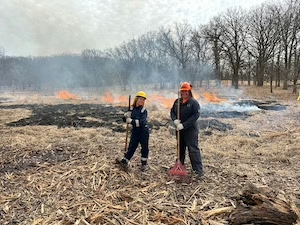
Effective habitat enhancement requires technical expertise, regulatory awareness, and field-tested methodologies. A3 Environmental Consultants applies a range of restoration techniques tailored to site conditions and management objectives. Common methods include selective herbicide application using backpack sprayers or hand-wicking, manual removal of invasive species, prescribed burning, and mechanical clearing of woody invasive vegetation using brush cutters or chainsaws.
All work is performed in coordination with land managers and in compliance with applicable state and local requirements. A3E staff maintain Illinois Department of Agriculture Pesticide Commercial Applicator and Operator Licenses and hold Chicago Wilderness Midwest Ecological Prescription Burn Crew Member certifications. These credentials ensure habitat enhancement activities are implemented safely, effectively, and in alignment with accepted ecological standards.
Habitat enhancement is not a one-time fix. It is an ongoing process that requires careful monitoring, adaptive management, and collaboration with stakeholders. By integrating field knowledge with long-term stewardship goals, A3E supports restoration strategies that are both practical and sustainable.
Business and Public Value of Habitat Enhancement
From a municipal and agency perspective, habitat enhancement represents a sound investment in public infrastructure. Natural areas managed through proactive stewardship provide measurable returns, including reduced flood risk, improved water quality, and lower long-term maintenance costs compared to degraded landscapes.
Since 2019, A3 Environmental Consultants has contributed to habitat enhancement programs that expand the stewardship capacity of FPCC staff while maintaining high ecological standards. These efforts help preserve some of the highest-quality remnant habitats in Illinois—areas that would be difficult or impossible to replace once lost.
For public agencies, habitat enhancement also supports regulatory compliance, grant eligibility, and public trust. Well-managed preserves demonstrate responsible land stewardship and reinforce the social, educational, and environmental mission of organizations like FPCC.
Regional Considerations in Cook County
Cook County presents unique challenges for habitat enhancement due to its dense development, fragmented landscapes, and heavy public use of natural areas. Restoration activities must balance ecological goals with public access, safety, and visibility.
A3E’s experience in northern Illinois allows for habitat enhancement strategies that account for regional soils, hydrology, invasive species pressures, and climate conditions. By focusing on wetlands, prairies, and woodlands, A3 Environmental Consultants helps maintain ecological diversity across the county’s preserve system while supporting long-term resilience.
Conclusion
Habitat enhancement plays a vital role in preserving Cook County’s natural heritage. Through careful planning, licensed professionals, and proven restoration techniques, A3 Environmental Consultants (A3E) supports the long-term health of wetlands, prairies, and woodlands across the region.
If your agency or organization is evaluating habitat enhancement services in Cook County or northern Illinois, A3E provides the technical expertise and local experience needed to deliver measurable ecological results.


