What Is a Transaction Screen Assessment?
A transaction screen assessment (TSA) is an environmental due diligence report governed by ASTM E1528 that evaluates a property for potential environmental contamination. A transaction screen assessment sits between a Record Search with Risk Assessment (RSRA) and a Phase 1 Environmental Site Assessment in scope and cost. It includes a database review, historical research, and a site visit — but it does not provide the CERCLA liability protections that a Phase 1 ESA delivers.
Banks and lenders — particularly those working with the Small Business Administration (SBA) — frequently request a transaction screen assessment for commercial real estate transactions. Understanding what a TSA includes, what it costs, and what it does not protect you from is essential before ordering one.
Transaction Screen Assessment vs. Phase 1 ESA vs. RSRA
The three most common environmental due diligence products form a clear hierarchy. Here is how a transaction screen assessment compares:
| Feature | RSRA ($850) | Transaction Screen Assessment ($1950) | Phase 1 ESA ($2,200+) |
|---|---|---|---|
| ASTM Standard | N/A (SBA SOP 50 10) | ASTM E1528 | ASTM E1527-21 |
| Database Review | Yes | Yes | Yes |
| Historical Research | Limited | Yes | Comprehensive |
| Site Visit | No | Yes | Yes |
| Interviews | No | Limited | Yes |
| CERCLA Liability Protection | No | No | Yes |
| Turnaround | 6–9 days | 10–15 days | 10–15 days |
| Requires Environmental Professional | No | No | Yes |
The critical difference: a transaction screen assessment takes the same amount of time as a Phase 1 ESA but provides the same liability protection as an RSRA — which is none. This is why environmental consultants, including A3 Environmental Consultants, often recommend skipping the TSA and choosing either an RSRA (if speed and cost are priorities) or a Phase 1 ESA (if you need CERCLA protection).
Who Needs a Transaction Screen Assessment?
Most transaction screen assessment requests come from one place: banks making SBA-backed loans. The SBA’s standard operating procedures allow a TSA as an acceptable form of environmental due diligence for certain commercial real estate transactions, particularly apartment buildings and lower-risk commercial properties.
You may need a transaction screen assessment if:
- Your lender specifically requests one by name for an SBA loan
- The property is commercial real estate with low environmental risk (office, retail, apartments)
- The transaction does not require CERCLA innocent landowner protections
- You need something more than a desktop environmental record search but your lender does not require a full Phase 1 ESA
If your lender does not specifically require a TSA, ask whether a Phase 1 ESA or RSRA would be accepted instead. In most cases, a Phase 1 ESA is the better investment because it provides actual legal protection under CERCLA.
What Does a Transaction Screen Assessment Cost?
A typical transaction screen assessment costs approximately $1950. For comparison:
- RSRA: $850 — desktop review only, no site visit, 6–9 day turnaround
- Transaction Screen Assessment: $1950 — desktop review plus site visit, 10–15 day turnaround
- Phase 1 ESA: $2,200–$4,000 — comprehensive assessment with CERCLA protection, 10–15 day turnaround
The price difference between a TSA and RSRA is roughly $1100, which covers the added cost of scheduling and conducting the site visit. The price gap between a TSA and Phase 1 ESA reflects the significantly more comprehensive scope of the Phase 1 — including detailed interviews, exhaustive historical research, and the professional opinions and conclusions required for CERCLA liability protection.
What Does a Transaction Screen Assessment Include?
Under ASTM E1528, a transaction screen assessment includes the following components:
Environmental Database Review

Environmental database reports are a key component of every transaction screen assessment
A search of federal, state, and local environmental database reports to identify known contamination sites, underground storage tanks, hazardous waste generators, and other environmental records near the property. A3E uses ERIS as our data vendor for these searches.
Historical Use Research
Review of historical aerial photographs, fire insurance maps, city directories, and other records to identify previous uses of the property that may have involved hazardous materials — gas stations, dry cleaners, manufacturing, auto repair, and other environmentally sensitive industries.
Site Visit
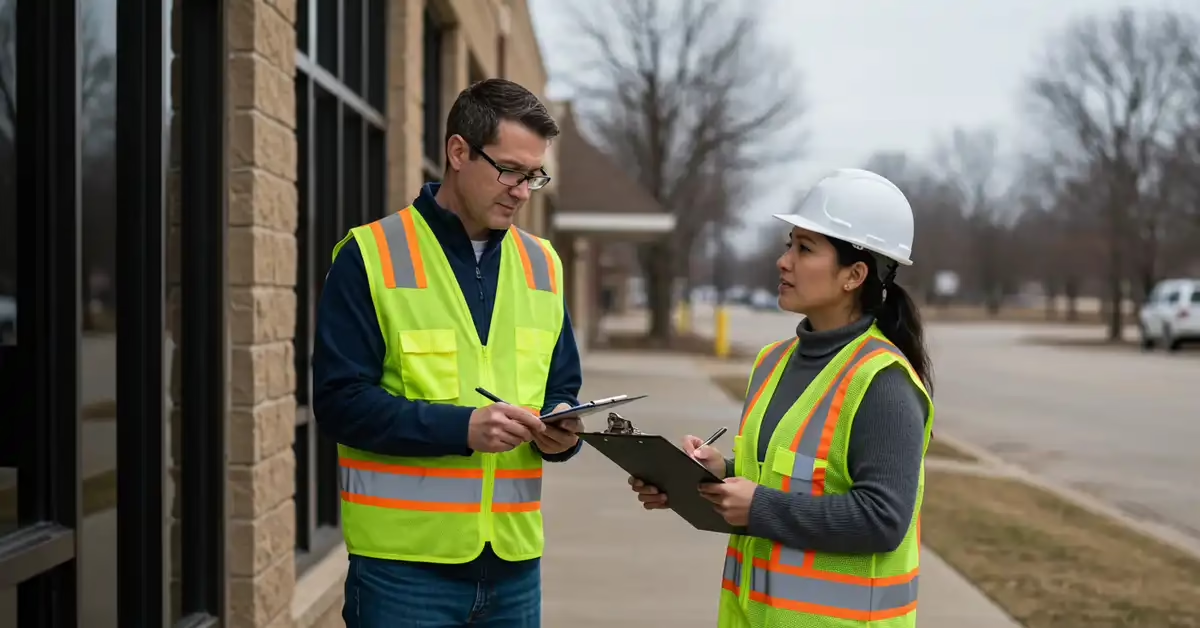
A physical inspection of the property to observe current conditions, identify potential environmental concerns, and document anything that warrants further investigation. This is what separates a transaction screen assessment from a desktop-only RSRA.
Transaction Screen Questionnaire
A standardized questionnaire completed by the property owner or occupant that asks about current and historical site operations, chemical storage, waste disposal, and known environmental issues.
What a Transaction Screen Assessment Does NOT Include
This is where the transaction screen assessment falls short compared to a Phase 1 ESA:
- No CERCLA liability protection — A TSA does not satisfy the requirement for “all appropriate inquiries” under CERCLA. If contamination is discovered later, you cannot claim innocent landowner, contiguous property owner, or bona fide prospective purchaser protections.
- No environmental professional opinions — ASTM E1528 does not require an environmental professional to develop opinions and conclusions about recognized environmental conditions (RECs). A Phase 1 ESA does.
- No comprehensive interviews — The TSA relies on a questionnaire rather than detailed interviews with owners, operators, occupants, and local government officials.
How Long Is a Transaction Screen Assessment Good For?
Like a Phase 1 ESA, a transaction screen assessment is valid for 180 days from the date of the report. After that, the findings may no longer reflect current site conditions, and lenders will typically require a new report or an update.
Who Can Perform a Transaction Screen Assessment?
Unlike a Phase 1 ESA, a transaction screen assessment does not require an environmental professional. ASTM E1528 Section 4.3 states that a TSA may be conducted by the user or any other party — including environmental consultants, lenders, brokers, appraisers, attorneys, and government agencies. However, hiring a qualified environmental consultant ensures the database review and site visit are thorough and the findings are reliable.
A3E Transaction Screen Assessment Services
A3 Environmental Consultants performs transaction screen assessments for banks, lenders, and commercial real estate buyers across Illinois from our office in the Chicago suburbs (41.7508°N, 88.1535°W). Our environmental professionals have completed hundreds of TSAs, Phase 1 ESAs, and RSRAs since 2015 — and we will tell you honestly which report your transaction actually needs.
If your bank is requesting a transaction screen assessment and you are not sure whether a TSA, RSRA, or Phase 1 ESA is the right choice, call us. We will review your situation and recommend the most cost-effective option that meets your lender’s requirements — including the SBA environmental reliance letter if needed.
Frequently Asked Questions About Transaction Screen Assessments
What is the difference between a transaction screen assessment and a Phase 1 ESA?
A transaction screen assessment (ASTM E1528) includes a database review, historical research, and site visit but does not provide CERCLA liability protection. A Phase 1 ESA (ASTM E1527-21) includes all of that plus comprehensive interviews, detailed environmental professional opinions and conclusions, and — most importantly — qualifies the buyer for innocent landowner and other CERCLA liability protections. The Phase 1 ESA costs more but provides legal protection the TSA does not.
Is a transaction screen assessment the same as a Phase 1?
No. A transaction screen assessment is less comprehensive than a Phase 1 ESA. The TSA does not require an environmental professional, does not include detailed interviews, and does not satisfy CERCLA “all appropriate inquiries” requirements. Many people confuse the two because both include site visits, but the legal protections are fundamentally different.
Why do banks request a transaction screen assessment?
Banks working with SBA-backed loans often request a transaction screen assessment because SBA standard operating procedures list it as an acceptable form of environmental due diligence for certain property types. It costs less than a Phase 1 ESA while still including a site visit, which gives lenders more confidence than a desktop-only RSRA.
Can I upgrade a transaction screen assessment to a Phase 1 ESA?
In some cases, yes. If the TSA identifies concerns that warrant further investigation, or if you decide you need CERCLA protection, an environmental consultant can build on the TSA work to complete a full Phase 1 ESA. However, the additional cost is usually close to what a standalone Phase 1 ESA would have cost, which is another reason to consider ordering the Phase 1 from the start.
What happens if a transaction screen assessment finds contamination?
If a TSA identifies recognized environmental conditions (RECs) or other concerns, the next step is typically a Phase 1 ESA to provide a more comprehensive evaluation and professional opinion, followed by a Phase 2 ESA (sampling and laboratory analysis) if contamination is confirmed. Because the TSA does not provide CERCLA protection, any contamination discovered after the transaction becomes the new owner’s responsibility.
Need a transaction screen assessment or not sure which report to order?
Contact A3 Environmental Consultants or call (888) 405-1742

We Fix Gnarly Environmental Problems
Reviewed by Alisa Allen, P.G.
