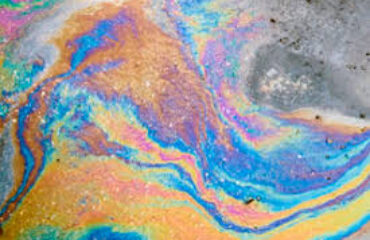
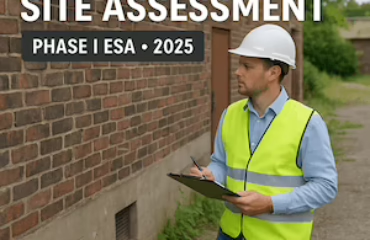
An environmental risk assessment for a commercial real estate (CRE) purchase tells you, before closing, whether the property carries contamination that could cost you money, stall your plans or become your legal problem. For most deals the right tool is a Phase I Environmental Site Assessment (ESA), performed to the ASTM E1527-21 standard. If it finds a Recognized Environmental Condition (REC), you can ask the seller to fix it, renegotiate the price or walk away while you still can.
Why an Environmental Risk Assessment Comes Before You Close
Contamination is the one property defect you cannot see on a walk-through. Buying without an environmental risk assessment is like buying a used car without looking under the hood. The condition may be fine, but if it is not, you own it. A buyer who skips the work can inherit another party’s contamination, along with the cost, delay and scrutiny that come with it.
An assessment also gives you leverage. If the work finds RECs, buyers can request remediation before closing, adjust the purchase price, or walk away entirely. That is why we cover it alongside the contract terms in our guide to environmental due diligence for commercial real estate buyers.
The 4 Risks an Environmental Risk Assessment Is Built to Catch
Financial risk
Contamination brings costs that are hard to predict and harder to quantify. Remediation can take years, even decades, depending on the type and extent of the problem. Time is money, and with contamination you lose both. A finished assessment turns an open-ended unknown into a defined issue you can price into the deal.
Reputation risk
Being linked to degraded soil, water or air draws unwanted attention. It can affect talent retention, partnerships and customer trust, and those effects can be permanent.
Operational risk
Some contaminants are flammable, explosive or immediately dangerous to human health. Industrial spills threaten workers and the public before the long-term ecological impact is even considered. For a buyer planning to occupy or redevelop the site, this risk lands on day one.
Regulatory compliance risk
Once regulators are involved, scrutiny rarely fades. Owners face potential fines, operational shutdowns and added compliance obligations while still managing the original problem.
How the Environmental Risk Assessment Works: 4 Steps
- Records review. The environmental professional reviews historical property records, including past uses, and environmental database reports. Our explainer on the environmental database report (EDR) shows what that search covers.
- Site inspection. The professional inspects the property for visible indicators of contamination, such as stained soil, drums, tanks or stressed vegetation.
- Identify RECs. Findings are sorted into Recognized Environmental Conditions, the items that matter to your decision.
- Report and decision. You receive a written report prepared under ASTM Standard E1527-21. If RECs appear, the next question is whether a Phase II ESA, which samples soil or groundwater, is warranted. Our guide to who pays for a Phase I environmental helps with the negotiation.
Lenders, including the SBA, HUD and USDA, typically require a Phase I ESA before financing a property, because contamination can drive a property’s value toward zero. Our reports meet or exceed ASTM standards and are accepted by all major lenders and government agencies.
What Does Skipping the Assessment Really Risk?
Skipping due diligence can mean inheriting another party’s environmental contamination. Beyond cleanup costs, hazardous conditions can derail redevelopment plans, lower property value and make resale nearly impossible. For CRE buyers the equation is simple: paying for an environmental risk assessment upfront is far cheaper than remediation later. For the wider picture of how we support deal teams, see how A3E helps CRE professionals close more deals.
Location Changes the Risk
Specific risks vary by place. Coastal properties might face saltwater intrusion, former industrial sites could hide petroleum residues, and agricultural land may have pesticide contamination. A3 Environmental Consultants (A3E) performs ESAs nationwide, tailoring each environmental risk assessment to the property type, location and likely hazards, while following the same federal standard. To see how that looks on a real file, read our rush Phase I ESA on an industrial facility project profile, or the 5 steps to an environmental site assessment before buying commercial property.
Project Example: A Phase I That Protected a Chicago Buyer
In 2019, A3E performed a Phase I ESA for a business owner buying a former bus-repair yard, earlier a dairy, in Chicago. Earlier tank cleanup work had left an Illinois EPA No Further Remediation (NFR) letter that required a paved barrier over the old tank pit. Our site visit found the barrier missing and a strong petroleum odor there, which could have voided the NFR letter. The finding was not a REC; it was an NFR-compliance problem, and it still mattered to the deal. Using our report, the buyer negotiated the fix with the seller, closed the purchase, and installed the barrier after moving in.
- Project: Phase I ESA before a purchase (2019)
- City: Chicago, Illinois
- Outcome: missing NFR barrier found; purchase closed; barrier installed by the buyer
Frequently Asked Questions
What is an environmental risk assessment for a CRE purchase?
It is a review of a property’s past and present use, records and visible conditions to identify contamination risk before you buy. For most transactions it takes the form of a Phase I ESA under ASTM E1527-21.
Is a Phase I ESA the same as an environmental risk assessment?
For a buyer, a Phase I ESA is the usual form of the assessment. It reviews records and inspects the site, but it does not sample soil or water. Sampling is done in a Phase II ESA, if the Phase I finds a REC.
Do lenders require one?
Lenders, including the SBA, HUD and USDA, typically require a Phase I ESA before financing a property.
What happens if the assessment finds a REC?
You can request remediation before closing, adjust the purchase price, or walk away. Which option fits depends on what the REC is and what your contract allows.
Get an Environmental Risk Assessment Before You Close
Contamination is the kind of risk you cannot afford to ignore. Request a Phase I ESA quote, call A3 Environmental Consultants at (888) 405-1742, or email [email protected].
Reviewed by Dave McCoy, P.G., Director of Operations, A3 Environmental Consultants.

We Fix Gnarly Environmental Problems