When commercial property transactions involve historical industrial uses, environmental due diligence becomes more than a checkbox—it becomes risk management. A Phase I Environmental Site Assessment (ESA) is often the first step lenders and developers take to understand whether past operations may have left behind contamination that could affect financing, liability, or redevelopment potential.
In April 2025, A3 Environmental Consultants (A3E) completed a Phase I ESA in Fairbanks, Alaska on behalf of an SBA lender evaluating the purchase of a commercial property with a long operational history. The site had previously hosted propane distribution, fuel operations, and more recently a dry cleaning business—each of which carries its own environmental risk profile.
For the lender, the goal was simple: obtain a clear picture of potential environmental liabilities before moving forward with the loan. For A3E, the assignment involved applying ASTM standards, coordinating travel to interior Alaska, and carefully documenting a property with more than fifty years of potentially contaminating uses.
Phase I ESA Findings at a Dry Cleaning Property in Fairbanks
The Phase I ESA conducted in Fairbanks revealed a complex property history that required careful review of historical records, regulatory databases, and on-site observations. Historical research indicated the property had been occupied by multiple high-risk operations dating back to the early 1970s.
Records showed that the site began with residential occupancy along with operations by Northern Gas and Oil Inc. Fuel Company starting in 1971. Between 1976 and 2003, the property was used by propane distribution companies including Vangas Inc. Propane and Home Town Propane. These uses raised the potential for historic petroleum-related impacts associated with fuel storage, handling, and transfer activities.
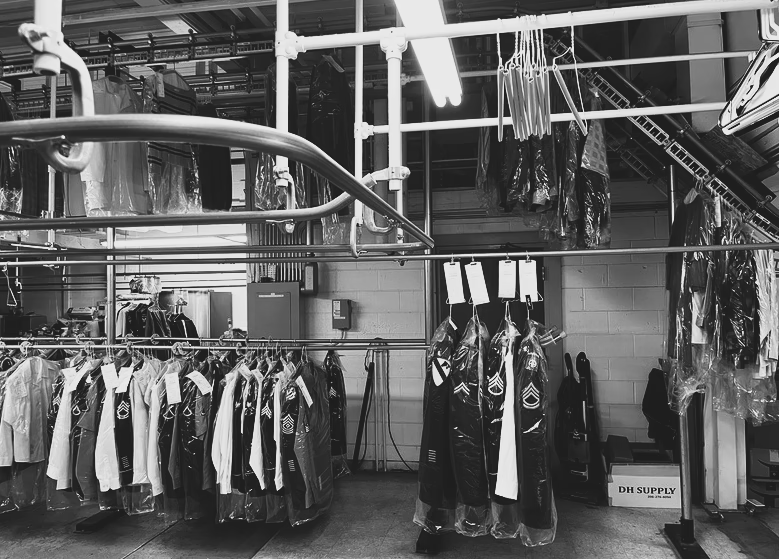
The most recent use of the property presented perhaps the most significant environmental concern. From 2007 through early 2025, the building operated as a dry cleaning facility. Dry cleaners are widely recognized in environmental consulting as high-risk operations due to the historical use of chlorinated solvents such as tetrachloroethylene (PCE). These compounds can migrate into soil and groundwater if spills or improper disposal occurred.
During site reconnaissance performed as part of the Phase I ESA, A3E personnel also observed structural indicators suggesting additional historic uses. Several large bay doors and a piston plate consistent with an in-ground hydraulic lift suggested that automotive service or repair activities may have occurred at the property in the past. In-ground hydraulic lifts are a common source of environmental concern because hydraulic fluid can leak into subsurface soils if the equipment deteriorates over time.
Because no documentation was provided confirming proper removal of the lift system, solvent management practices, or environmental closure associated with earlier fuel operations, the property presented multiple potential sources of contamination. As a result, the Phase I ESA identified several Recognized Environmental Conditions (RECs) requiring further evaluation.
Phase I ESA Process and Methodology
The assessment followed the requirements of ASTM E1527-21, the current industry standard governing the preparation of a Phase I ESA. This standard also satisfies the Environmental Protection Agency’s All Appropriate Inquiries (AAI) rule, which is required for parties seeking liability protections under federal environmental law.
The A3E team conducted several key components required for a compliant Phase I ESA.
First, regulatory database research was performed to evaluate listings associated with the property and surrounding sites. These databases identify facilities involved in hazardous material handling, underground storage tanks, spills, and other regulatory activities that may signal potential environmental concerns.
Second, a comprehensive historical records review was conducted. Historical aerial photographs, city directories, topographic maps, and other sources were evaluated to reconstruct the site’s operational history. This step is critical because environmental risks often originate decades before a property transaction occurs.
Third, A3E performed a site reconnaissance to visually inspect the property and surrounding area. This field visit allows environmental professionals to identify indicators such as chemical storage areas, floor drains, distressed pavement, abandoned equipment, or staining that could signal releases of hazardous substances.
Fourth, interviews were conducted with individuals familiar with the property. These discussions help fill gaps that historical records cannot always explain, particularly regarding equipment removal, chemical handling practices, or prior environmental investigations.
Finally, all findings were compiled into a formal Phase I ESA report documenting historical uses, regulatory data, site observations, and professional conclusions regarding the presence or absence of Recognized Environmental Conditions. This report format is designed to support lenders, developers, and property owners making high-value financial decisions.
Business Impact for the Lender and Borrower
Environmental due diligence rarely produces dramatic headlines, but it can quietly shape the outcome of major transactions. In this case, the Phase I ESA provided the SBA lender with a clear assessment of potential environmental liabilities associated with the property.
Several Recognized Environmental Conditions were identified, primarily tied to the long-term dry cleaning operation and the potential presence of chlorinated solvent contamination. Additional concerns included the possible former in-ground hydraulic lift and the legacy presence of fuel and propane suppliers on the site.
Because of these findings, A3E recommended a Phase II ESA to evaluate potential soil and groundwater impacts. A Phase II investigation typically involves environmental sampling to determine whether contamination is present and, if so, to what extent.
However, environmental investigations ultimately depend on borrower and lender risk tolerance. In this case, the borrower elected not to proceed with the additional subsurface investigation recommended in the Phase I ESA report. As a result, the transaction did not move forward.
While that outcome may sound negative at first glance, it illustrates the value of environmental due diligence. By completing a thorough Phase I ESA in 2025, the lender was able to understand the environmental risk profile before committing to the loan. Avoiding an unknown contamination liability can prevent significant future costs related to remediation, regulatory compliance, and property value impacts.
Environmental Considerations Unique to Fairbanks, Alaska
Conducting a Phase I ESA in Fairbanks, Alaska presents logistical and environmental considerations that differ from projects in more densely populated regions. Interior Alaska experiences extreme seasonal conditions, which can influence both fieldwork scheduling and environmental risk assessment.
For this project, travel coordination was a primary logistical factor. A3E personnel traveled from the Lower 48 to complete the site reconnaissance and evaluation. Long-distance project coordination required careful planning to ensure all research, documentation, and field observations were completed efficiently.
Fairbanks also presents unique environmental characteristics that consultants must consider when evaluating potential contamination. Cold climate conditions and seasonal freeze-thaw cycles can affect how contaminants migrate through soil. Additionally, the presence of permafrost in certain areas can alter groundwater movement compared to more temperate environments.
Historic industrial operations in smaller markets like Fairbanks may also have limited documentation compared to properties in major metropolitan areas. That reality makes the historical research component of a Phase I ESA particularly important when reconstructing property use over multiple decades.
Despite these challenges, the project demonstrated that environmental due diligence standards can be successfully applied even in remote markets. The same ASTM E1527-21 framework used in Chicago, Seattle, or Dallas can be applied in Alaska to produce defensible, lender-ready environmental reports.
Conclusion
Commercial real estate transactions depend on accurate information, and environmental risk is one of the most important unknowns that must be evaluated before a deal closes. A properly conducted Phase I ESA helps lenders and developers identify potential liabilities, understand historical property uses, and make informed financial decisions.
The 2025 Phase I ESA completed in Fairbanks, Alaska illustrates how environmental due diligence can uncover complex property histories involving fuel distribution, propane storage, and dry cleaning operations. By identifying Recognized Environmental Conditions and recommending further investigation, the assessment provided the lender with the clarity needed to evaluate risk before moving forward with financing.
Not every environmental investigation leads to a completed transaction—but every thorough Phase I ESA helps ensure that decisions are made with full knowledge of potential environmental liabilities.
For lenders, developers, and commercial real estate professionals evaluating properties with complex operational histories, environmental due diligence is not simply a regulatory requirement. It is a strategic tool that protects investments and prevents costly surprises down the road.
If you are planning a commercial property acquisition and need a reliable Phase I ESA, A3E Environmental Consultants can help guide the process with technically sound assessments and practical insights for lenders and developers. To enlist our services for environmental due diligence on your transaction, contact A3 Environmental Consultants at (888) 405-1742 or via email at Info@A3E.com.


