Hydrovac spoil management is the work of testing, profiling, tracking and disposing of the muddy soil and water that hydro-excavation brings up. A3 Environmental Consultants (A3E) has run hydrovac spoil management for public utility providers in Northern Illinois since 2020. We sample the soil before the crew digs, get the disposal facility’s approval, manifest every load and keep the records for good. This project profile shows how it works.
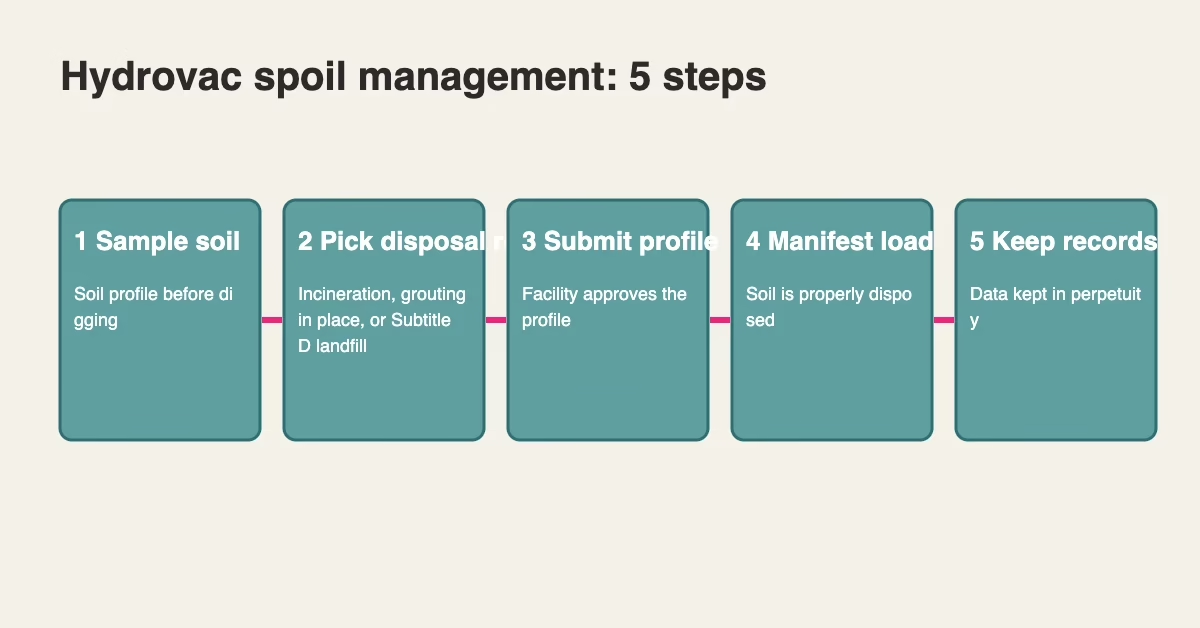
Hydrovac spoil management process: sample, profile, approval, manifest and records for Northern Illinois utility spoils
Why Hydrovac Spoil Management Matters
When you work around underground utilities, you cannot risk damaging the pipes and lines you came to maintain. Hydrovac excavation solves that. Crews use high-pressure water to expose the utilities, so hand digging or machines can then work safely near them.
The trade-off is the material that comes out. Hydrovac spoils are soil mixed with water, and they are considered special waste. They have to be solidified (dried out) before disposal, or the wet soil could cause slope instability at the landfill. Utility providers also have to track waste streams, hazardous and non-hazardous, and the tracking, documenting and manifesting are required by the USEPA and other local regulatory agencies. Our guide to soil management plans for environmental earthwork covers the same discipline on larger earthwork jobs.
How A3E Manages Hydrovac Spoils
Public utility providers in Northern Illinois rely on A3E to track their waste streams, and hydrovac spoils are one of them. A3E performs sample collection and analytical data reviews to determine the correct method for disposal of the material. Here is the sequence, in the order it happens.
- Sample the soil. A3E collects soil samples in the area of excavation to create a soil profile in advance of excavating.
- Choose the disposal method and location. We review the analytical data to pick the right route: incineration, grouting in place, or final disposal at a Subtitle D landfill.
- Submit the profile. A3E prepares and submits the sample profile to the landfill or solidification facility for approval.
- Manifest the soil. Once the facility approves, A3E manifests the soil so it is properly disposed.
- Keep the records. A3E maintains all of the data in perpetuity.
Step five saves money later. Having the soil profile stored for the future drives costs down when more work is done at the same utility location. To learn how disposal sites are chosen, see our posts on Illinois landfill pricing and waste disposal and CCDD for regular people, and the CCDD map.
A3E also directs the spoils to the appropriate facilities for solidification. The waste characterization behind each decision is the same kind of work A3E does on other waste streams, such as the PCB waste tracking and disposal for a Northern Illinois utility (2022 project profile).

Hydrovac spoil management on a Northern Illinois utility project
Project Profile: Hydrovac Spoil Management for Northern Illinois Utilities
This work has run from 2020 to the present for public utility providers in Northern Illinois, with an estimated value of $200,000. Dave McCoy, a Professional Geologist, does the final review, and Taylor Closen and Jessica Vacala manage the project.
Client:
Public Utility Provider(s)
Location:
Services:
General Consulting
Hydrovac Excavation Spoil Management
Waste Characterization
Key Staff:
Dave McCoy, Professional Geologist, Final Review
Taylor Closen, Project Management
Jessica Vacala, Project Management
Duration:
2020 to present
Value:
Estimated $200,000
What Clients Get From Hydrovac Spoil Management
The client gets a documented path for every load: a soil profile, the facility’s approval, a manifest and a permanent record. Because the soil is profiled before excavation and the data stays on file, the same utility location is easier and cheaper to work on again. The tracking, documenting and manifesting are required by the USEPA and other local regulatory agencies, and A3E handles them as part of the service. For more on the agency side, see the USEPA overview of the Resource Conservation and Recovery Act.
Frequently Asked Questions
What is hydrovac excavation?
Hydrovac excavation uses high-pressure water to expose underground utilities, so hand digging or machines can safely excavate near them without damaging the infrastructure.
What are hydrovac spoils?
Hydrovac spoils are the soil mixed with water created by hydro-excavation. They are considered special waste and have to be solidified (dried out) before disposal.
Why do hydrovac spoils need to be solidified?
Wet soils could cause slope instability at the landfill, so the spoils go to a facility that solidifies them first. A3E directs the spoils to the appropriate facilities.
How are hydrovac spoils disposed of?
After sampling and analytical review, the correct method is chosen: incineration, grouting in place, or final disposal at a Subtitle D landfill. A3E submits the soil profile for approval, then manifests the soil.
Who keeps the records?
A3E maintains all of the data in perpetuity. Keeping the soil profile on file drives costs down when more work is done at the same utility location.
Talk to A3E About Hydrovac Spoil Management
If your crews are hydro-excavating near utilities and you need the spoils profiled, manifested and tracked, request a soil management quote, call (888) 405-1742 or email [email protected].
Reviewed by Dave McCoy, P.G., Director of Operations, A3 Environmental Consultants.

We Fix Gnarly Environmental Problems