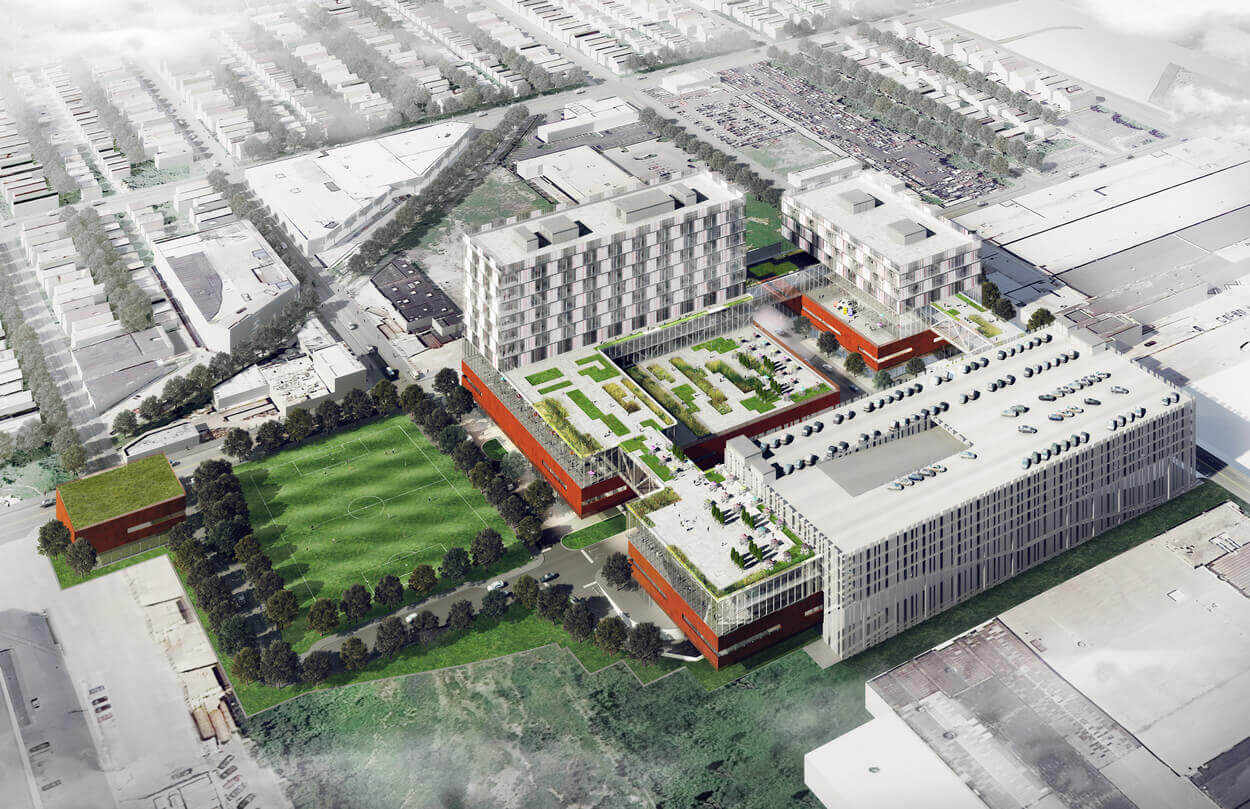
Brownfield community involvement means explaining a cleanup project to the people who live next to it, listening to what worries them and putting those concerns on the record. On the Focal Point Community Campus in Chicago, David McCoy, P.G., of A3 Environmental Consultants (A3E) worked with the client and attended public meetings during the grant application process to answer community members and community interest groups. This page covers what the work looks like and five practices that make a brownfield public meeting useful.
Why Brownfield Community Involvement Matters
Residents have good reason to ask what is in the ground near them. The Focal Point campus is planned to serve more than 440,000 people in neighborhoods including Little Village, North Lawndale, Austin, Brighton Park, New City, East and West Garfield Park, Archer Heights, Gage Park and McKinley Park, so many people had a stake in the answers.
Brownfield community involvement also matters to the funder. EPA’s guidance for brownfield grant applicants treats community engagement as part of a strong application. See EPA’s application resources. The paperwork side of that story is in our brownfield grant writing case study.
What A3E Did at Focal Point
The record of this work is short and specific. During the grant application, Mr. McCoy worked with the client and attended public relations meetings to address the concerns of community members and community interest groups. Mr. McCoy was involved in two community meetings, and roughly 25 people were there. At those meetings he answered questions about the environmental impact of the project and its benefits to the community.
The setting was a project that began in 2012 as the site for a new Saint Anthony Hospital to replace its 121-year-old facility and grew into a plan for health and wellness services, early childhood development, continuing education, affordable housing, recreation and retail. Mr. McCoy’s part in the meetings was the environmental questions.
5 Practices for a Brownfield Public Meeting
These are general practices, not a record of what was said at the Focal Point meetings.
1. Start With the Site’s History
People trust a speaker who knows what the site was used for. Cover the history from the Phase I environmental site assessment in plain language.
2. Separate What Is Known From What Is Not
Before sampling is finished, say what is still being studied. Residents notice when an answer is overconfident.
3. Explain the Process and Who Reviews It
Cleanup in Illinois is reviewed by the state. Our guide to the Illinois Site Remediation Program shows the steps, so you can describe where a project is and what comes next.
4. Answer the Environmental Impact Question Directly
The most common question is whether the site is safe now and whether the work will change that. Answer it first, then give detail.
5. Bring the Technical Person and the Owner Together
The owner explains the vision and the consultant explains the environmental facts. Residents get both answers in one room.
Brownfield Community Involvement Within a Larger Project
Public meetings were one of three services on this project. The grant application is covered in the grant writing case study, and the investigation and cleanup planning in the brownfield remediation case study.
Project Snapshot: Focal Point Community Involvement
- Client: Chicago Southwest Development Corporation
- Setting: Focal Point Community Campus, West 31st Street and South Kedzie Avenue, Chicago
- A3E role: attended public meetings and answered questions on environmental impact and community benefit
- Meetings: two community meetings; roughly 25 people were there
- A3E staff: David McCoy, P.G.
- Time: during the grant application process
Frequently Asked Questions
What is brownfield community involvement?
It is the work of informing neighbors and community groups about a brownfield project, listening to their concerns and answering questions about environmental impact and benefits.
Who answered community questions at Focal Point?
David McCoy, P.G., of A3E attended the public meetings with the client and answered questions on the project’s environmental impact and community benefits.
Does community involvement affect a brownfield grant?
EPA’s grant guidance includes community engagement among the things it looks at. Review the current EPA application resources for each funding round.
A3E project fingerprint
- Project: Focal Point Community Campus community involvement
- City: Chicago, Illinois
- Coordinates: 41.8372°N, 87.7048°W
- Staff: David McCoy, P.G., Director of Operations
Facing a public meeting on brownfield community involvement? A3E sends a licensed professional geologist who can explain the site. Request a quote or call us at (888) 405-1742.
Reviewed by Dave McCoy, P.G., Director of Operations, A3 Environmental Consultants.

We Fix Gnarly Environmental Problems
